
Water & Wildfires: Understanding Lantzville’s Fire Protection Capabilities
With intense wildfires dominating Canadian news headlines, emergency preparedness has taken center stage in communities across the country.
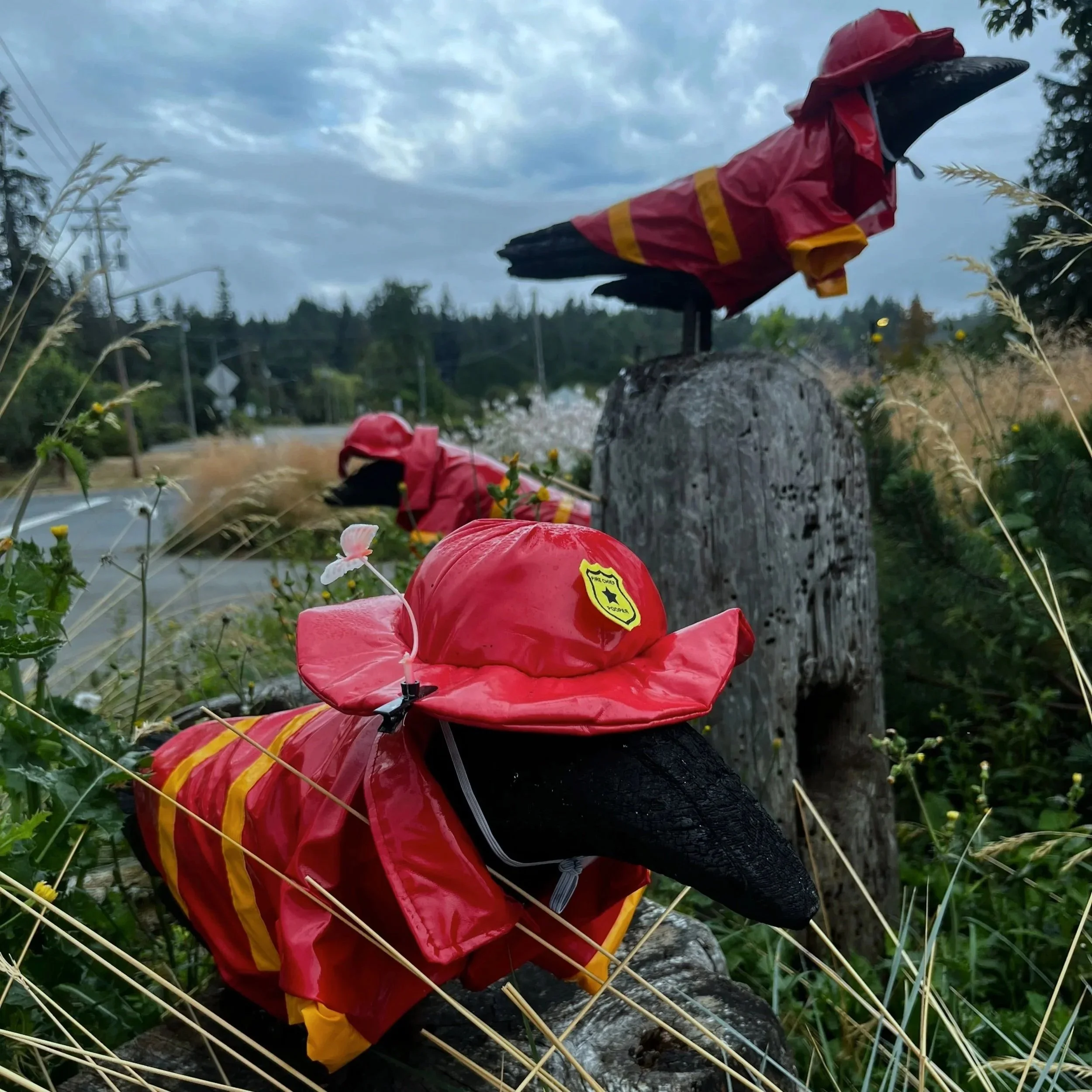
For us in Lantzville, the threat is not a distant news story. Last year, July 13, 2025, brush fire broke out near the intersection of Hwy 19 and Superior Rd. Fortunately, that fire ignited directly across the highway from our local Fire Hall, Firefighters responded and contained it almost instantly.
But what if a fire broke out further away from our emergency responders, in an area where water access is limited?
When we talk about municipal water infrastructure, we often focus on what comes out of our kitchen taps. However, underground pipes, reservoirs, and hydrants form the backbone of emergency fire protection. To help Lantzville residents form their own opinions on what our community should prioritize, this article explores the physical and operational realities of how our water system protects us and where gaps exist.
The Hydrant Gap: Serviced vs. Unserviced Zones
Out of the approximately 1,330 total properties in the District of Lantzville, roughly 300+ properties (or nearly 25% of the municipality) are outside the central municipal water distribution network. While "The Winds" accounts for 141 of those properties, the remaining unserviced properties are spread across several distinct pockets and corridors throughout the district. These include “The Winds”, Superior Rd & Normarel Dr corridor, upper Aulds Rd & Ware Rd outer pockets, and north Lantzville & Dickinson Rd extremities.
Lantzville fire suppression capabilities vary significantly depending on where you live.
Serviced Municipal Zones: In core areas of Lantzville, firefighters can connect directly to pressurized municipal water lines via fire hydrants. This provides an immediate, continuous, and high-pressure supply of water to extinguish structural or wildfires.
Unserviced Zones (e.g., The Winds): 300+ properties relying entirely on private wells such as “The Winds or Superior Rd & Normarel Dr corridor” have zero municipal fire hydrants.
If a fire breaks out in an unserviced neighborhood like “The Winds”, emergency crews cannot connect a hose to a nearby hydrant. Instead, Lantzville Fire Rescue initiates "water shuttles." Firefighters rely on water tenders (tanker trucks) to transport water from the nearest pressurized hydrant to the scene of the fire. While firefighters are trained in water shuttle logistics, transporting water back and forth takes time, limits the continuous flow available to suppress a rapidly spreading fire, and depends heavily on road accessibility.
Infrastructure Footprint: Our Reservoirs and the Upper Zone Limit
Lantzville connected water network relies on multiple storage reservoirs across distinct elevation zones to maintain system pressure and feed fire hydrants during an emergency:
Ware Road Reservoir (Lower Pressure Zone): Lantzville's main central storage facility holds 1,887 cubic meters of water, supplying gravity-fed flow and fire protection to approximately 660 connected properties along the lower commercial core, coastal lanes, and lower Lantzville Road.
Harwood Road Reservoir (Upper Pressure Zone): Built in 2020 at an elevation of 158 meters, this facility serves connected properties in Upper Lantzville. However, due to a municipal decision to utilize a phased construction strategy, it currently operates at only one-third of its planned capacity (660 cubic meters actual vs. 1,963 cubic meters ultimate target).
Foothills Reservoir (High Elevation Zone): Positioned at an elevation of 342 meters, this high-elevation storage site services the Foothills development and is linked into the main network via Pressure Reducing Valve (PRV) stations, allowing emergency water to flow downward into lower zones during a major fire.
While lower-zone hydrants benefit from the larger Ware Road storage, upper-zone fire protection relies directly on the Harwood Road facility. Because this upper reservoir currently operates at 660 cubic meters (roughly one-third of its recommended ultimate design capacity of 1,963 cubic meters), it limits the continuous volume of emergency water available to firefighters during a major or prolonged fire event. This strain is further heightened if an emergency occurs during peak summer domestic water use.
The Watermain "Looping" Dilemma
Water pressure during an emergency is also dictated by how pipes are laid out underground. Many parts of Lantzville network consist of "dead-end" water lines. Dead-end pipes are problematic because water sits stagnant, which can degrade water quality. More importantly, dead-ends drastically restrict water pressure during emergencies.
To achieve safe, standard emergency fire flows of 60 liters per second, municipal engineers prioritize "looping" water mains. Looping connects water lines into continuous circular networks. This ensures that water flows to a fire from multiple directions simultaneously, maintaining the high pressure required to operate modern fire suppression equipment effectively.
Two Paths Forward: What Should Lantzville Prioritize?
Addressing these fire protection gaps is one of the most significant challenges facing Lantzville, and residents hold differing viewpoints on how to move forward.
The Pro-Expansion View: Community-Wide Infrastructure
Proponents of expanding municipal water to unserviced areas advocate that fire protection is a fundamental public safety responsibility. Bringing water mains and fire hydrants to unserviced neighborhoods drastically improves localized fire suppression, protects lives and properties, and can lower residential home insurance premiums. They argue that investing in a robust, connected network is the only way to safeguard Lantzville against the growing threat of wildfires.
The Infill & Asset-Management View: Prioritizing Existing Systems
Conversely, other residents emphasize that expanding water mains to unserviced areas has massive financial impacts. Under the Local Area Service model, individual property owners faced maximum upfront capital costs of approx. $25,500 (or $1,400 annually for 30 years) to fund their portion of the water line. Opponents of immediate expansion advocate that these costs outweigh the potential savings on home insurance, and instead recommend Lantzville focus its limited tax dollars on upgrading existing infrastructure first, such as expanding the under-capacity Harwood Road Reservoir, before taking on the debt and maintenance liability of extending lines to new areas.
As we look at our community’s future, Lantzville should decide how to balance emergency safety, infrastructure upgrades, and financial costs.
What Do You Think?
Should Lantzville prioritize spending capital funds to upgrade emergency reservoir storage for existing users, or focus on extending water mains and hydrants to unserviced neighborhoods?
Join the Conversation: Follow us on Facebook to share your thoughts and join the discussion.
